
CINI (the Best NGO in Kolkata) intervenes in some of the most environmentally fragile geographical areas, such as coastal and deltaic zones; flood-prone, riverine, mangrove areas; land affected by salinization and arsenic contamination, also of ground water; metro cities and slums; deforested hills and drought-prone regions. In addressing vulnerabilities of children from a holistic perspective, including through an
environmental lens, CINI supports young people who are victims of recurrent cyclones, floods (i.e., tsunami, Aila, Amphan, Yash, Assam floods), earthquakes (i.e., Nepal), epidemics and pandemics (i.e., COVID-19, dengue outbreaks). It also assists them as they increasingly turn into environmental migrants with their families or on their own.
Acting on such environmentally fragile terrains, CINI has learned to merge development, humanitarian and emergency work in one single community-based convergent and preventive approach. In seeking to promote children’s rights to a safe, clean, healthy and sustainable environment, CINI’s 5-Year Strategy 2022-2027 therefore identifies the environment and climate change as a thrust area in programming for children.

To strengthen its commitment to creating a child-friendly environment, CINI identifies a set of core dimensions where to concentrate its work to address the impact of environmental degradation and climate change on children’s rights, including their environmental rights:


Over the next 5 years strategy period, programme interventions will be consolidated to further children’s rights to a sustainable environment,
especially in three main directions as follows:
CINI’s experience in environment space can be categorized mainly in the following three broad sectors:

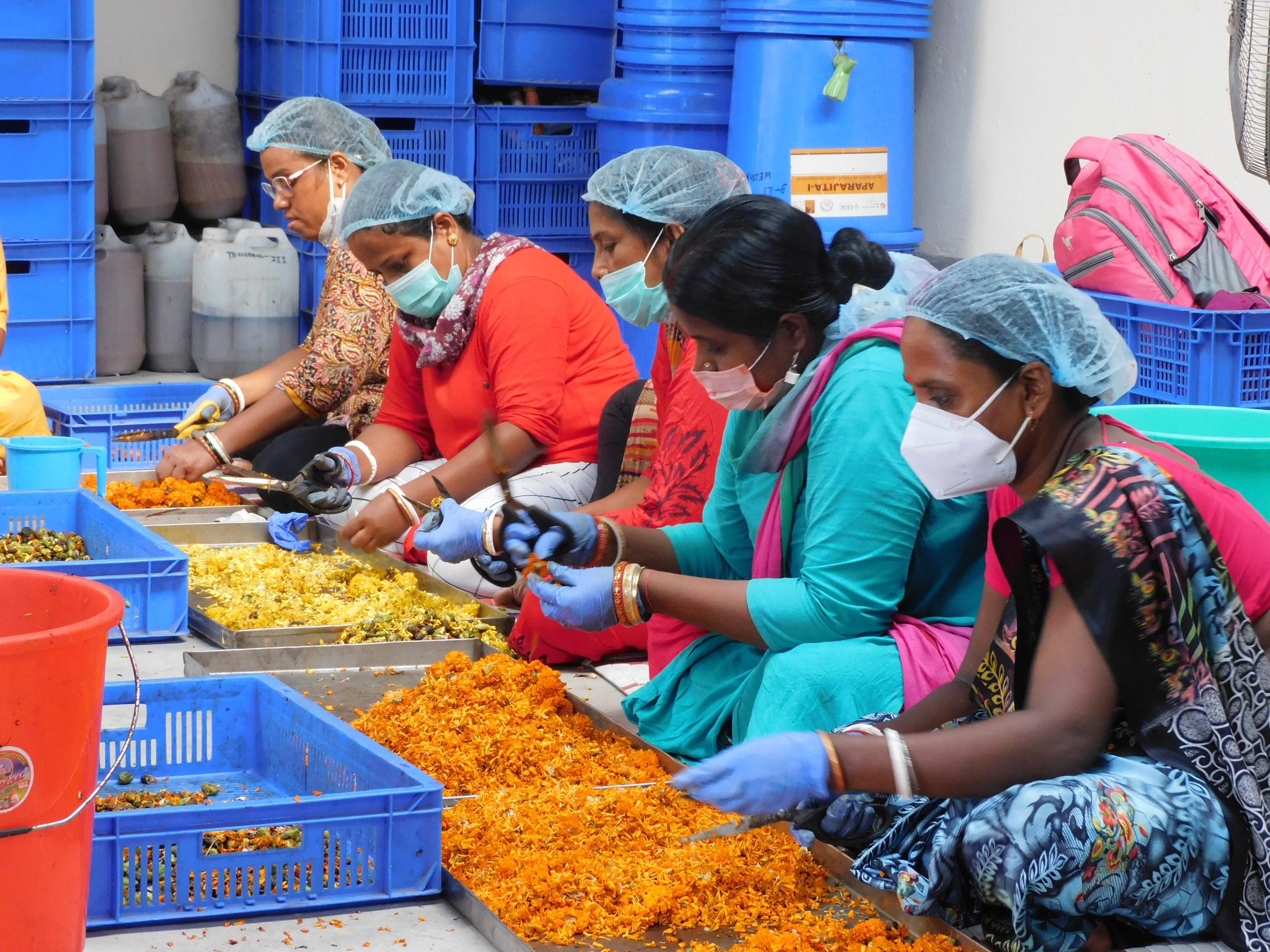
Aparajita: Model Scientific Floral Waste Management – Floral waste constitutes nearly a third of all solid wastes of our country, contributing to pollution both on land and in water. Recognizing the urgent need for action, CINI, in collaboration with the North Dumdum Municipality and with the support of CESC Ltd., has embarked on the Scientific Flower Waste Management. The goal is to create a model scientific Floral Waste Management System that promotes the efficient use of floral waste and reduces its impact on the environment and the health of our children, as well as empowers women in urban Self-Help Groups by providing them with livelihood opportunities.
Under the Integrated Solid Waste Management (SWM) and Vector Control Management of State Urban Development Agency (SUDA), in addition to training on Vector Borne Diseases and Dengue prevention activities, CINI has been involved in providing support to strengthen the waste management system across 127 ULBs and 02 Development Authorities in West Bengal.
CINI Implemented project on Climate Change issues during 2011-2014 in Kolkata and South 24 Parganas districts in partnership with Navadanya and Centre for Environment Education focusing on:
CINI conducted a collaborative research project to Assess Adverse Health Outcome of Exposure to Household level Air Pollutants in Rural Community – in collaboration with TERI which was supported by Ministry of Health and Family Welfare, Government of India.
CINI is building community resilience against pandemic & climate change with the support of John D. and Catherine T. MacArthur Foundation in West Bengal & Jharkhand covering a total of 5,03,564 direct population. The project responds to global challenges like one of the deadliest pandemics (Covid 19), environmental degradation, and climate change by working collectively with various
stakeholders and community people.
In partnership with NISHTHA/JHPIEGO, CINI also implemented a project titled ‘Creation of Model Resilient Villages’ leveraging community level participatory approach in Assam, across 200 villages of two selected blocks. The aim of the project is to create model resilient villages with respect to public health emergencies to mitigate associated risks and respond to evolving challenges. The attempt is to build and strengthen resilient abilities of a village with the potential to recover in the face of prevalent stress or shocks. The project gives importance to flood mitigation, preparedness, recovery strategies, disaster risk reduction and climate action advocacies among others health centric
interventions in order to reduce prevailing disease burden in order to prevent infectious diseases and other public health emergencies.


We encourage students, researchers and volunteers to do electives and internships with us throughout the year on mutually agreed upon terms and conditions.
Learn MoreEnter your email address


Daulatpur, P.O : Pailan, Via Joka, South 24 Parganas, West Bengal, 700104. India
Tel: +91 84204 58926
Email: cini@cinindia.org
Website: cini-india.org


